Worcester job sites and event grounds need working handwashing stations wherever workers handle food, apply coatings, or use portable toilets without a built-in sink. Federal rules set the baseline. 29 CFR 1910.141(d)(2) requires soap and towels or a hand-drying device, not sanitizer alone, and that single line trips up more Worcester sites than anything else in the rulebook.
Two different OSHA sections cover this, and Worcester contractors mix them up constantly. OSHA 1926.51(c) sets toilet counts, not handwashing, but most portable toilet rental units get paired with a station anyway because crews expect one at the door, and the same logic applies to a porta john rental or a full portable restroom rental order. The rule that actually forces a wash station is OSHA 1926.51(f)(1), and it only applies where workers are applying paints, coatings, herbicides or insecticides, or working around other harmful contaminants. If your Worcester crew is pouring concrete and framing, that section may not touch you at all. If they are spraying sealant or handling pesticides on a landscaping job, it does. Pair that with 29 CFR 1910.141(d)(2), which governs general industry washing facilities and demands actual soap and a drying method. A jug of sanitizer hanging off a fence post does not satisfy either standard, whether the crew is running a construction site services job or a smaller home renovation porta potty setup. We set up handwashing station rental units with foot-pump sinks and refillable soap so Worcester sites clear both requirements without guessing. For sites that only need the sanitizer version because there is no contaminant exposure, a hand sanitizer station rental can supplement, but it never replaces a real sink where 1926.51(f)(1) applies.
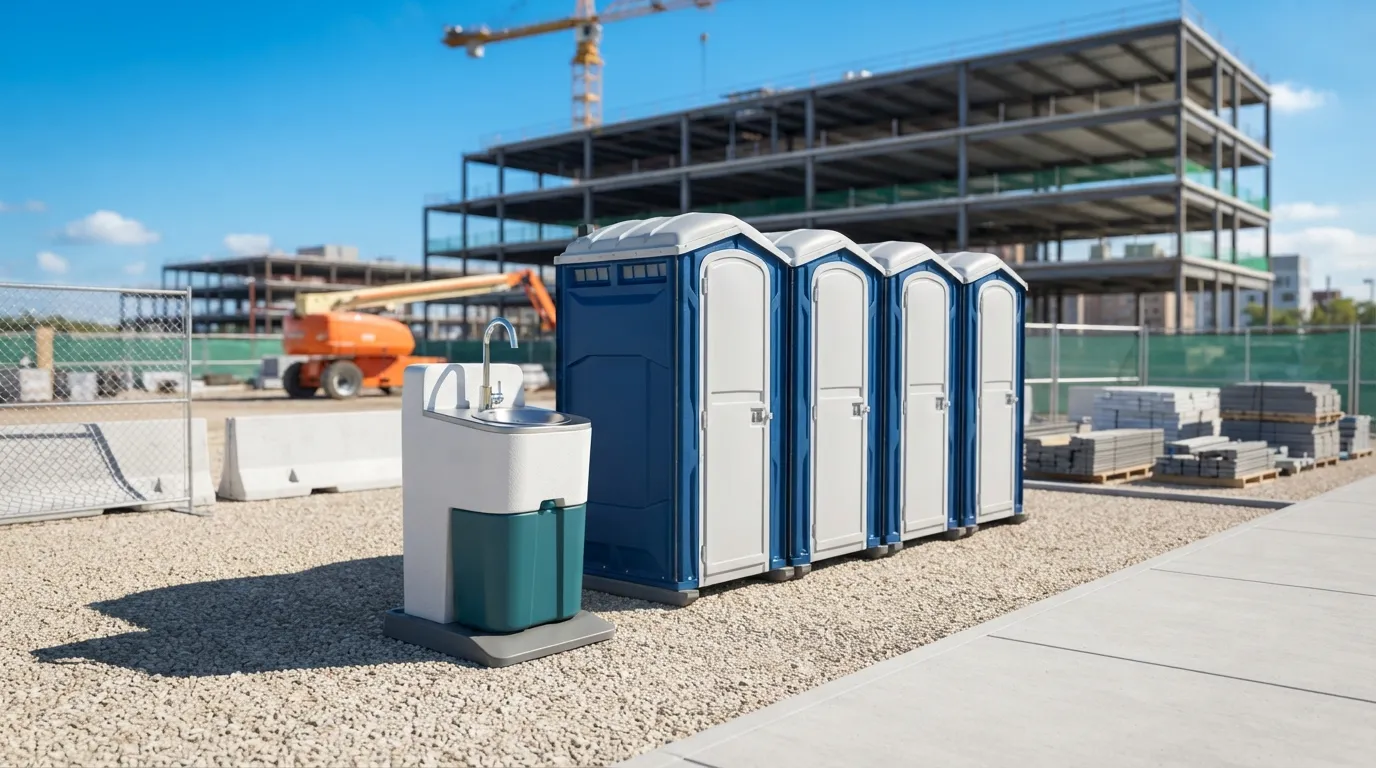
There is no fixed ratio in the federal code the way there is for toilets. OSHA 1926.51(c) spells out toilet counts by crew size, from one unit for 20 workers or fewer up through the 200-plus tier, and most Worcester supervisors use that same headcount to figure handwashing placement, one station near each toilet cluster. A 15-person framing crew working a Shrewsbury-adjacent site 5.3 miles east of downtown Worcester typically runs two to three stations if there's any coating or adhesive work mixed in, the same headcount logic that drives our OSHA portable toilet requirements guide. Event organizers work differently, and the same split shows up on wedding restroom rental and festival restroom rental jobs. A wedding or festival crew renting from our event restroom rental page usually sets one station per restroom bank, not per headcount, because guest traffic clusters at the same spots the toilets sit. If you're unsure how many total units your job needs before you even get to handwashing, run the numbers on our how many porta potties do I need guide first, since station count usually follows toilet count on mixed-use sites.
Right at the exit path from the toilet bank, and close enough that nobody skips it. ADA Standards section 213.2 requires that at least 5 percent of clustered single-user toilet units be accessible, never fewer than one, and that same accessible unit needs a reachable station beside it. ADA Standards section 308.2.1 caps the forward reach at 48 inches high and 15 inches low, so a station mounted too high fails an accessible layout even if the toilet itself passes. ADA Standards section 309.4 also matters here: pumps and levers on the station need to work with one hand and no tight grasping, capped at 5 pounds of force. If your Worcester site includes an ADA accessible porta potty, plan the station placement together with it rather than as an afterthought, a step our ADA restroom requirements page walks through in more detail. Ground surface matters too. ADA Standards section 302.1 calls for stable, firm, slip-resistant footing, which rules out loose gravel or soft turf under a station that will see repeated foot traffic all day. Our porta potty placement guide covers ground prep for the whole cluster, not just the accessible unit.
Yes, and Worcester has both. Farm labor operations fall under OSHA 1928.110, which requires potable water, toilets and handwashing for hand-labor employees at one facility per 20 workers, reachable within a quarter mile walk of wherever they're working the field. That quarter-mile rule is the one detail that trips up growers who set a single station at the barn and call it done. If your operation covers ground larger than that radius, you need more than one setup. Check our farm and agricultural restrooms page for how that plays out on working land around Worcester, and compare setups with a construction dumpster rental job if the site handles both debris and hand-labor crews. Food vendors at fairs and festivals answer to a different pressure entirely, health department expectations for washing between handling raw product, and a portable sink rental with hot water capability often satisfies that better than a cold-water foot-pump unit. Whether you're running a county fair restrooms setup, a golf tournament restrooms event, or a single food truck, match the station to the water temperature the activity actually needs, not just the cheapest unit available.
No. 29 CFR 1910.141(d)(2) specifically calls for soap and towels or a hand-drying device. Sanitizer can supplement a real station but it cannot stand in for one where washing facilities are required. Worcester sites that rely on sanitizer alone during coating or pesticide work are not meeting 1926.51(f)(1); our OSHA portable toilet requirements page covers the toilet-side rules that usually come up alongside it.
Most Worcester rentals follow the same weekly baseline as portable toilets under ANSI/PSAI Z4.3, refilling soap and water and swapping waste tanks. High-traffic events or larger crews often need more frequent visits; ask us to match service to your headcount before the job starts, the same question we answer on how often are porta potties cleaned.
Yes. Plenty of Worcester food vendors and small crews rent a standalone portable sink rental unit without a full toilet order. It works well for short jobs where a nearby restroom already exists but handwashing does not.
A handwashing station has running water, soap and a drying method, meeting 29 CFR 1910.141(d)(2). A hand sanitizer station rental unit only dispenses sanitizer, faster to place but not a substitute where actual washing is required by contaminant exposure rules.
Placement in the public right of way needs confirming with the city before delivery. We recommend checking with Worcester before the truck arrives; see our porta potty permit requirements page for the general process most rentals follow, or start with a request a quote so we can flag it early.
Yes. Worcester Porta Pros delivers handwashing station requirements across Worcester and the surrounding metro, with same-day and next-day drop-off available on most orders.
Pricing depends on the unit and how long you need it. See our cost breakdown and request a free quote for an exact figure.
Standard rentals include scheduled service — a pump-out, a clean, a restock and fresh deodorizer. Busy or hot-weather sites can be serviced more often.
Call now or request a free quote — clean units, on-time delivery, transparent pricing.